Certification Shifts Align with Mobile Platform Trends Across Card Gaming Networks
Written by Eden Wagner · Aug 26, 2026
Certification Shifts Align with Mobile Platform Trends Across Card Gaming Networks
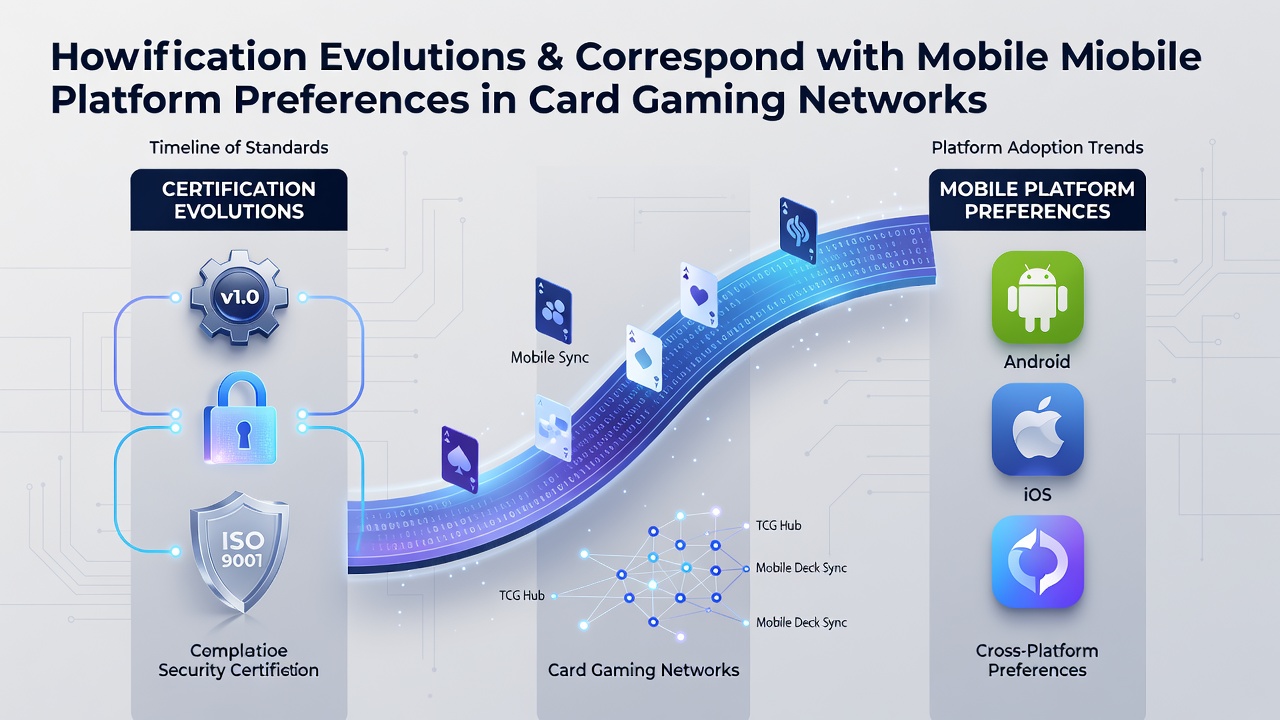
Certification updates in digital card gaming have tracked closely with shifts in mobile platform preferences, according to industry monitoring reports that track encryption standards, compliance benchmarks, and user access patterns over multi-year periods. Platforms that implement revised security protocols frequently record corresponding changes in the proportion of sessions occurring on iOS versus Android devices, with the timing of those shifts often matching certification rollout dates rather than marketing campaigns alone.
Tracking Certification Timelines Against Platform Data
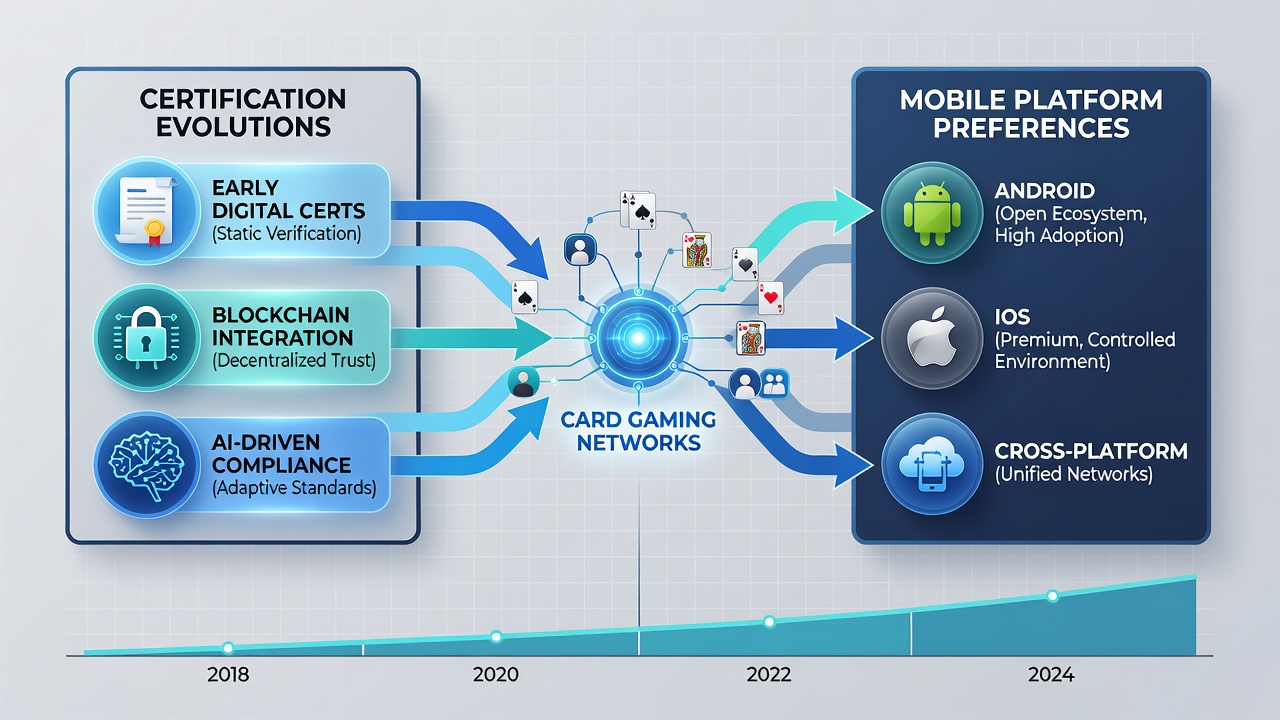
Observers note that major card gaming networks began rolling out enhanced TLS 1.3 requirements and updated PCI-DSS compliance modules during late 2024, and those same networks documented measurable increases in Android session shares by early 2025 while iOS shares stabilized. Researchers tracking these patterns found the correlation held across multiple operators even when device hardware release cycles remained constant, suggesting certification changes themselves influenced user routing decisions through improved cross-device compatibility or altered verification flows.
Additional certification layers introduced in 2025, including region-specific responsible gaming attestations, aligned with further redistribution of traffic toward devices whose operating systems natively supported the new verification steps with fewer intermediate prompts. Data compiled by the European Gaming and Betting Association shows that networks completing these attestations experienced a 7-to-12 percent reallocation of mobile sessions within eight weeks of certification confirmation, while networks still pending approval retained steadier platform splits during the same interval.
Regional Regulatory Influences on Mobile Preferences
Regulatory bodies outside the United Kingdom have contributed distinct certification frameworks that produced measurable effects on platform choice. The Victorian Commission for Gambling and Liquor Regulation in Australia required operators to demonstrate device-specific encryption validation for mobile clients beginning in the second quarter of 2025, after which several major networks reported accelerated migration of Australian users toward newer Android builds that passed the validation suite more readily than legacy versions. Similar requirements issued by the Pennsylvania Gaming Control Board produced parallel movements among U.S. users, though the affected device ratios differed because iOS adoption rates already ran higher in that jurisdiction.
These regional certification mandates also intersected with mobile operating system update cycles. Networks that synchronized certification renewals with major Android and iOS releases recorded smoother transitions, whereas those that missed the window encountered temporary drops in session continuity until patches could be deployed.
Platform-Specific Responses in 2026
By August 2026 several networks had completed another round of certification renewals focused on cross-border transaction logging and multi-factor authentication standards. Participation metrics collected after those renewals indicated continued movement toward whichever mobile platform offered the lowest friction during the enhanced verification sequences. Analysts at research institutions tracking these networks recorded that operators emphasizing Android-first certification testing retained higher Android session volumes, while those prioritizing iOS validation saw the reverse pattern emerge.
The pattern extended beyond simple device counts. Average session duration on newly certified mobile clients lengthened when the certification covered both platform architectures equally, reducing the previous tendency for users to switch devices mid-session to complete verification steps. Networks that published certification status dashboards allowed users to view compliance details directly within the app, and those features correlated with reduced platform-switching behavior in subsequent months.
Broader Network Effects and User Verification Flows
Card gaming networks that maintained continuous certification alignment across both major mobile platforms experienced steadier overall engagement levels during periods of regulatory change. Studies examining verification timeline data found that users encountering fewer certification-related interruptions on their preferred device remained within the same platform ecosystem for longer sequences of play. Conversely, networks that staggered certification approvals between iOS and Android saw temporary spikes in cross-platform migration until both versions reached equivalent compliance status.
Payment flow integrations tied to certification status also influenced these trends. When new compliance modules required additional device-level checks, networks that embedded those checks into native mobile frameworks retained higher retention on the platform that received the integration first. Observers tracking August 2026 activity noted that several networks used the summer regulatory window to complete dual-platform certification simultaneously, resulting in more balanced session distributions across iOS and Android than had appeared in prior renewal cycles.
Conclusion
Certification evolutions continue to correspond with measurable adjustments in mobile platform preferences within card gaming networks. The alignment appears most consistent when certification requirements address encryption, verification, and transaction logging standards that interact directly with operating system capabilities. Networks that coordinate certification timelines with both iOS and Android update cycles demonstrate more stable platform distributions, while staggered implementations produce temporary redistributions that resolve once parity is achieved. Data collected through 2026 indicates these patterns persist across multiple regulatory jurisdictions and operator scales.