How Adaptive Tournament Formats Reshape Payment Flow Preferences Across Poker Platforms
Written by Quinn Schmidt · Jun 15, 2026
How Adaptive Tournament Formats Reshape Payment Flow Preferences Across Poker Platforms
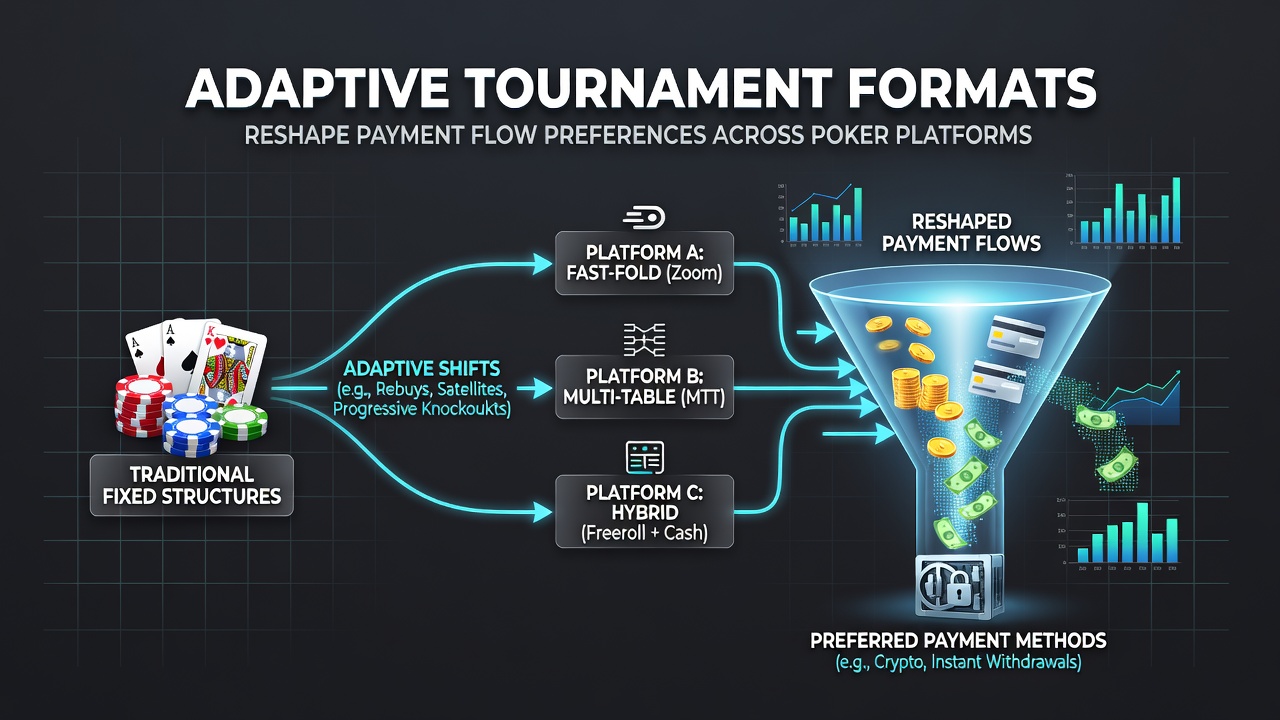
Adaptive tournament formats have shifted how poker platforms manage entry structures, blind levels, and payout schedules based on real-time player data, and these changes directly influence which payment methods participants select for deposits and withdrawals. Platforms adjust formats such as progressive knockouts, satellite feeders, and dynamic re-entry windows to match traffic patterns, while payment preferences evolve toward options that support quick funding cycles and seamless compliance checks.
Core Mechanics of Adaptive Tournament Structures
Operators collect metrics on session length, average stack depth, and regional participation rates to modify tournament parameters mid-series. When traffic spikes in certain time zones, formats shift to shorter blind intervals or added bounty elements, and these adjustments create demand for payment flows that process within minutes rather than hours. Data from multiple platforms shows that players entering these variable events favor methods capable of handling repeated small-to-medium transactions without cumulative delays.
Research from the European Gaming and Betting Association indicates that adaptive formats increased cross-border entries by 18 percent during the first half of 2026, with corresponding rises in instant settlement requests. Payment processors responded by expanding support for stablecoin transfers and e-wallet integrations that align with the compressed timelines of these events.
Payment Method Shifts Driven by Format Changes
Traditional bank transfers lose ground when tournaments adapt on short notice because verification windows often exceed the registration deadlines of dynamic structures. Instead, users migrate toward cryptocurrency rails and prepaid digital wallets that bypass lengthy clearing periods. Observers note that platforms offering same-day fiat conversion for crypto deposits record higher completion rates for late-entry adaptive events.
Figures released by the Nevada Gaming Control Board reveal that licensed operators saw crypto deposit volume rise 27 percent year-over-year through May 2026, coinciding with expanded use of format-flexible tournaments. Players cite reduced friction during satellite qualification paths as the primary driver, since these paths frequently require multiple micro-deposits within narrow timeframes.
Regional Patterns and Compliance Influences
In North American markets, platforms integrate adaptive bounty formats with payment gateways that pre-verify user data during account setup, which shortens transaction approval for subsequent entries. European operators, meanwhile, emphasize formats that reward consistent participation and pair them with e-wallets already cleared through local regulatory sandboxes. Australian platforms have documented similar trends, where hyper-turbo adaptive series correlate with elevated use of instant bank transfer services that comply with real-time reporting mandates.
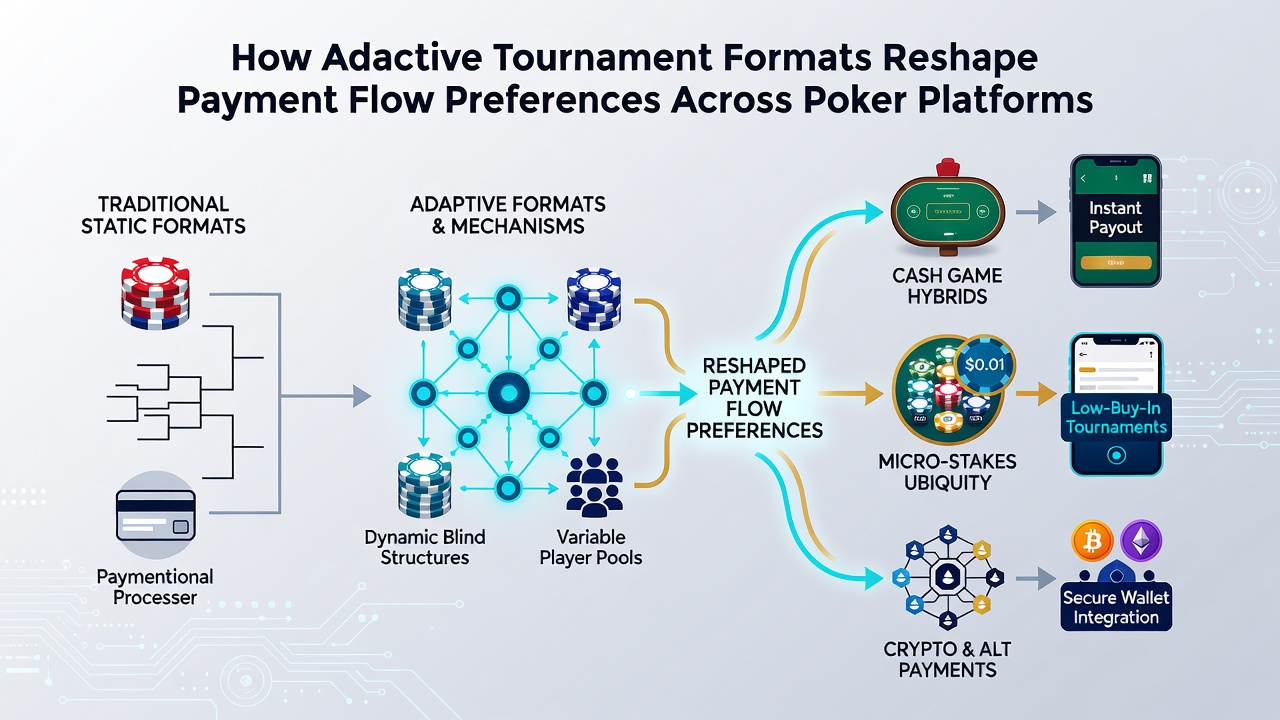
One study conducted by researchers at the University of Sydney tracked deposit method selection across 12 weeks of adaptive events and found that participants switched to faster rails after encountering even a single registration cutoff caused by slower processing. The pattern held across different buy-in tiers, suggesting the effect stems from format adaptability rather than stake size alone.
Platform-Level Adjustments and User Behavior Data
Leading sites now embed payment preference prompts directly into tournament lobbies, surfacing options that match the expected duration of each adaptive structure. When a platform detects heavy traffic for a progressive knockout series, it surfaces e-wallet and crypto choices first, and conversion rates for those methods climb accordingly. Analysts tracking June 2026 activity report that such contextual prompts increased successful deposits by double-digit margins compared with static menu presentations.
Those who monitor transaction logs observe that withdrawal requests following adaptive tournament payouts skew toward the same instant methods used for entry, creating closed-loop preferences that platforms then optimize through targeted incentives. This feedback loop strengthens as operators refine algorithms that predict format popularity days in advance.
Conclusion
Adaptive tournament formats continue to reshape payment ecosystems by rewarding speed and predictability in financial flows. Platforms that align deposit and withdrawal options with the variable rhythms of these events maintain higher participation metrics, while payment providers adapt their offerings to meet the resulting demand for rapid, compliant processing across regions. The interplay remains measurable through ongoing transaction data and format performance reports.