How Regional Data Privacy Rules Influence Player Verification Flows and Tournament Entry Patterns in Digital Poker Spaces
Written by Cameron Jung · Aug 12, 2026
How Regional Data Privacy Rules Influence Player Verification Flows and Tournament Entry Patterns in Digital Poker Spaces
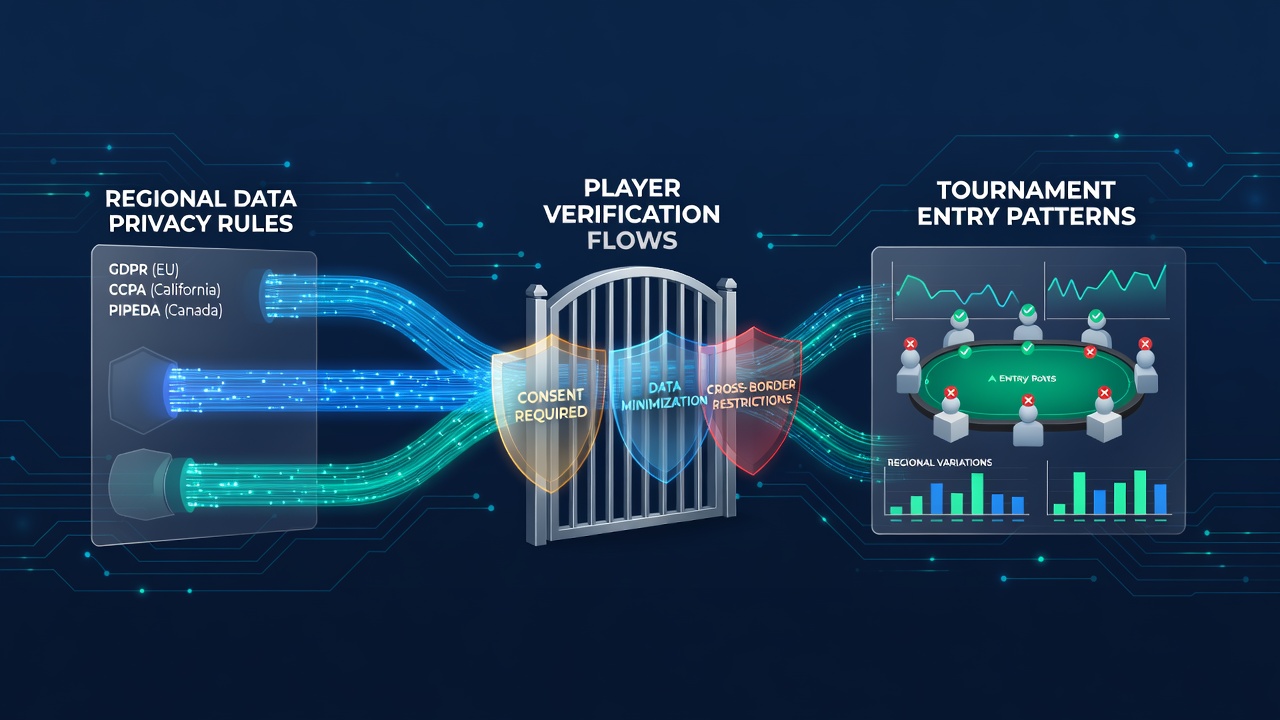
Regional data privacy regulations have reshaped how online poker platforms handle player verification, and those changes ripple outward to affect tournament registration volumes across different markets. Platforms operating in multiple jurisdictions must adapt their data collection practices to comply with rules that limit what personal information operators can request during onboarding, while still meeting anti-money laundering standards that demand robust identity checks.
Privacy Frameworks and Their Reach
Rules such as the EU's General Data Protection Regulation, Canada's Personal Information Protection and Electronic Documents Act, and Australia's Privacy Act create distinct requirements for consent, data minimization, and cross-border transfers. Operators adjust verification flows accordingly, often introducing tiered processes that collect only the minimum data needed at each stage. Research from the Office of the Privacy Commissioner of Canada shows that platforms using phased verification see faster initial sign-ups, yet they still gather full documentation before players access high-stakes tournaments.
Verification Adjustments Across Markets
In regions with strict consent rules, poker sites replace lengthy forms with modular screens that let users approve data use in stages. This approach reduces drop-off during the first login but extends the timeline for full tournament eligibility because additional checks occur later. European operators, for instance, route players through encrypted ID upload portals that store biometric data only within the region, while North American platforms sometimes rely on third-party services that segment data to satisfy varying state-level statutes.
August 2026 brought updated guidance from several oversight bodies on automated decision-making in gaming environments, prompting several major sites to revise their verification algorithms. Those revisions shortened processing times in compliant jurisdictions yet lengthened them where regulators required manual review of cross-border data flows.
Effects on Tournament Entry Patterns
Data from industry tracking services indicate that tournament participation rates diverge along regulatory lines. Markets with streamlined verification after privacy rule updates report steadier entry numbers, whereas regions enforcing stricter data localization see temporary dips when players encounter new consent prompts mid-registration. One analysis of platform logs revealed that users in jurisdictions emphasizing data portability complete fewer multi-table tournament series per month, possibly because re-verification steps interrupt established play routines.
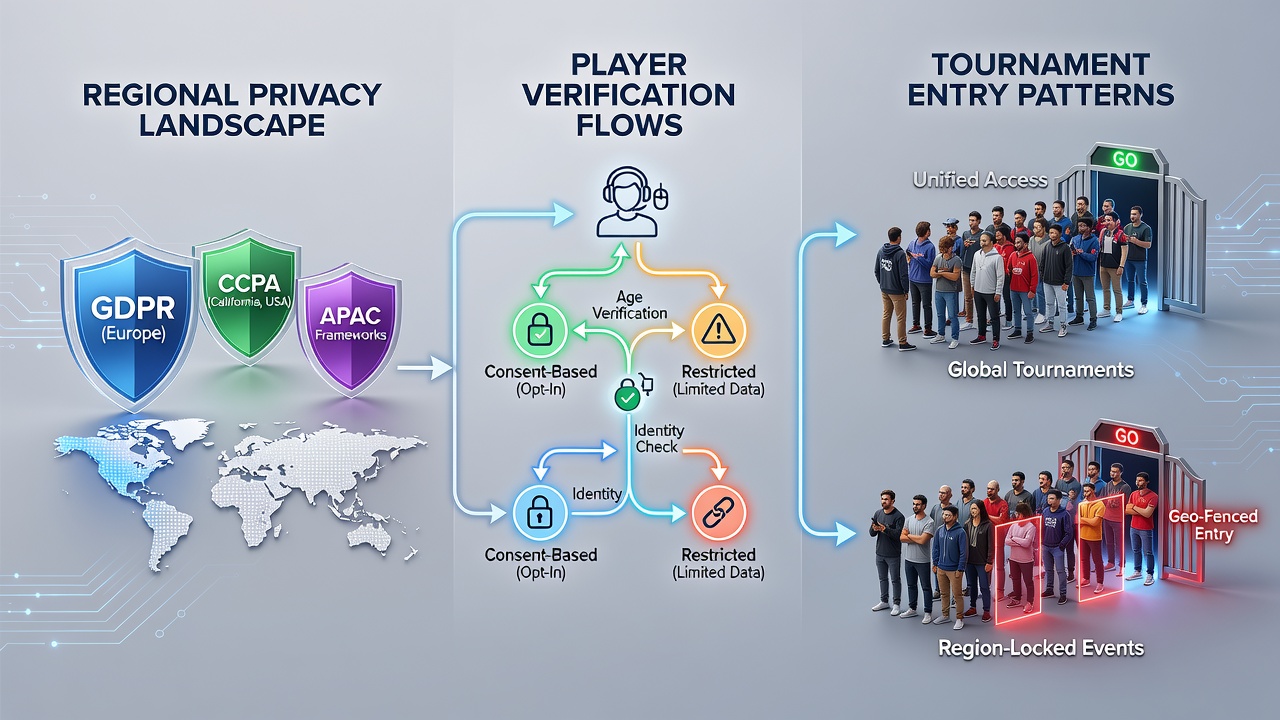
Observers note that operators respond by offering region-specific tournament schedules that align with local verification windows. In practice this means European players encounter more daily low-stakes events that require lighter checks, while Australian participants see larger guarantee events scheduled after peak verification processing periods.
Cross-Border Data and Player Mobility
When players travel or switch accounts across borders, privacy rules on data transfer create friction. Platforms must obtain fresh consent or implement adequacy decisions before moving verification records, and these steps correlate with lower repeat entry rates in tracked cohorts. A 2026 report prepared for the Asia-Pacific Gaming Association documented that mobile users crossing from high-privacy to lighter-regulation zones completed 18 percent fewer satellite entries during the transition month.
Yet operators have developed workarounds such as localized data vaults that keep verification files within the original jurisdiction while still allowing tournament access through token-based authentication. This method preserves compliance without forcing players to restart the entire verification sequence each time they change regions.
Emerging Patterns in Mid-2026
Platform metrics collected through summer 2026 show a stabilization in entry patterns once verification flows incorporate privacy-by-design principles from the outset. Sites that rebuilt their systems around data minimization recorded higher retention of verified users across successive tournament series. Meanwhile, jurisdictions that introduced new breach notification timelines prompted operators to add extra confirmation steps, temporarily slowing registration for large field events.
Those who've examined longitudinal data find that the influence of privacy rules extends beyond initial sign-up and shapes how frequently players return for scheduled tournaments. Faster verification cycles in one region often coincide with increased satellite participation that feeds into major events hosted elsewhere.
Conclusion
Regional data privacy rules continue to mold both verification procedures and tournament entry behaviors in digital poker environments. Platforms that align their flows with local consent and transfer requirements maintain steadier participation levels, while those adapting through modular checks and localized storage demonstrate measurable differences in registration timelines and player mobility patterns. Ongoing regulatory updates in 2026 underscore the need for flexible systems that accommodate evolving privacy expectations without disrupting core tournament access.